
A dab is a small amount of cannabis concentrate, a sticky extract that can be 50 to 90% THC or more, vaporized on a hot surface and inhaled in one breath. Concentrates are made by pulling the resin out of the plant with a solvent, with heat and pressure, or with ice water. They're sold as wax, shatter, badder, live resin, rosin or distillate.
Dabs deliver a lot of THC very fast. Health Canada tells new and occasional users to avoid extracts. Montana's cannabis regulator recommends concentrates only for experienced users. In a 2020 study of regular users, people who used concentrates had more than twice the THC in their blood of people who smoked flower. This page explains what they are so you can decide, not so you can start with one.
Contents9
What is a cannabis concentrate?
Cannabis flower is mostly plant material. The THC and the aroma compounds, called terpenes, sit in tiny resin glands on the surface. A concentrate is that resin collected and separated from the plant, which is why it can run 50 to 98% THC where flower runs about 12 to 30%, according to Montana's consumer guide. Producers get there three ways:
- Solvent extraction. Butane, propane, ethanol or CO2 dissolves the resin out, then the solvent is removed. Wax, shatter, badder, live resin and distillate come from here.
- Heat and pressure. Flower or hash is squeezed between hot plates and the oil runs out. That's rosin. No solvent.
- Ice water and sieves. Frozen plant material is washed and the glands are sifted out as hash. Pressed, it becomes hash rosin.
The live resin vs. live rosin page goes deeper on the two you'll see most on a menu.
What is a dab?
"Dab" means two things. The product: a small amount of concentrate, usually a dark gold to amber smear, sticky or glassy or crumbly depending on the type. And the act: "dabbing" is heating a surface, touching the concentrate to it, and inhaling the vapor. The names you'll see describe texture, not strength: shatter (glassy sheet), wax and budder or badder (soft, opaque), crumble (dry), sauce (runny with crystals), diamonds (crystals of THCA, the form THC takes before it's heated), live resin and live rosin (made from fresh-frozen plants), distillate (refined, nearly pure THC, mostly used in vape carts). The label, not the texture, tells you the THC.
How strong are dabs?
Very. NIDA, the US drug research agency, says dabbing "can rapidly deliver large amounts of THC to the body, which increases the risk of negative side effects." A dab is mostly THC, and you take it in one breath. Much of a joint's THC burns away or drifts off as side smoke. So one dab can deliver as much THC as a whole joint, or more.
Here's the twist. In a 2020 study published in JAMA Psychiatry, researchers in Colorado tested 121 regular users. Each used legal products they bought at a dispensary: flower at 16 or 24% THC, or concentrates at 70 or 90%. The concentrate group's blood THC peaked at more than twice the flower group's. Yet both groups reported similar highs and showed similar effects on balance and memory. The researchers were surprised that potency didn't track with how high people felt. The researchers think tolerance is part of the reason, since these were regular users. They warned that the result does not apply to inexperienced users, who should be extremely cautious with concentrates.
How do you smoke dabs?
Strictly you don't smoke them; you vaporize them. The usual setup is a dab rig: a small water pipe with a quartz, titanium or ceramic cup called a banger or nail where the bowl would be. The parts and the steps:
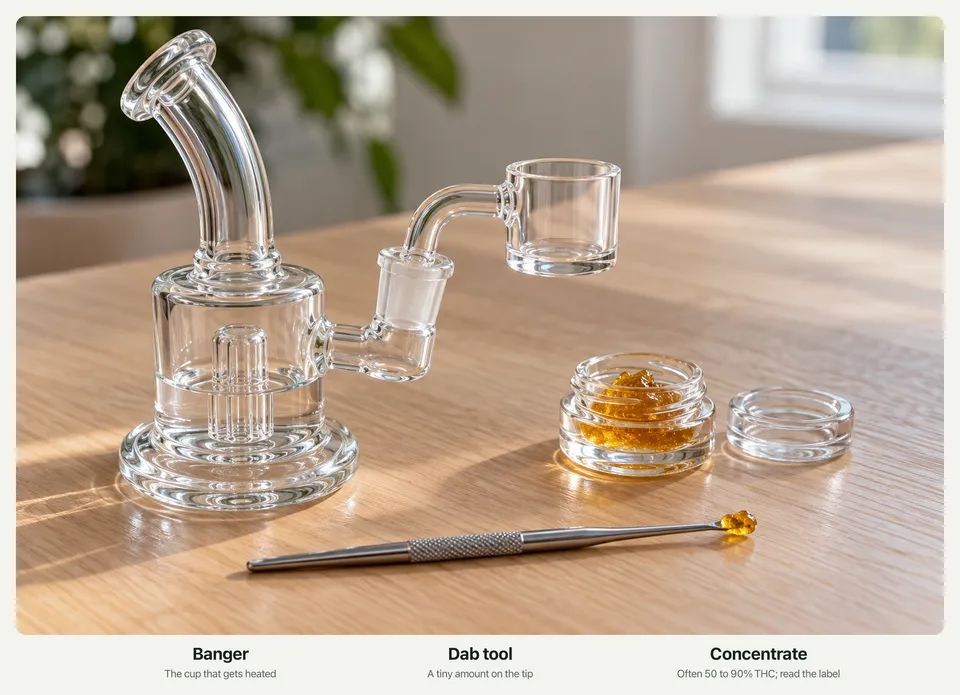
- Heat the banger with a small torch, then let it cool before you dab. A surface that's too hot burns the concentrate, tastes harsh, and in one lab study made more irritants.
- Pick up a tiny amount of concentrate on a metal or glass dab tool. Less is more: the smallest amount the tool will pick up.
- Touch it to the banger while you inhale slowly. It vaporizes on contact.
- Cover with a carb cap if you have one. It traps heat and controls airflow so the dab vaporizes evenly.
- Breathe out and put the rig down. Wait. Effects start within seconds to minutes, and Health Canada says inhaled cannabis can take up to 30 minutes to reach full effect.
E-rigs heat the cup electrically to a set temperature with no torch, which removes the guesswork and the flame. Dab pens are small vaporizers with a chamber for concentrate; convenient, less control. Lower temperatures are gentler on the throat and keep more flavor; higher ones give a bigger hit and burn off terpenes. Don't improvise with hot knives or stove burners. The burn is not worth it.
Not a first-time product
Health Canada tells new and occasional users to avoid extracts like hash, kief, wax and shatter because of their THC concentration. Montana's cannabis regulator recommends concentrates only for experienced users with a higher tolerance. Its advice for anyone who uses them: "Start low and go slow." If you've never used cannabis, read the first-time guide and begin with flower or a low-dose edible. If you take a dab and it's too much, the too high page tells you what to do. Keep concentrates and torches locked away from children and pets. If a child gets into cannabis, call Poison Control at 1-800-222-1222. For a pet, call your vet.
Are dabs safer than smoking?
No, just different. A dab isn't combustion, so you skip the smoke from burning plant matter. But vapor from a hot banger isn't clean air. In one lab study, heating the terpenes found in cannabis at common dabbing temperatures produced an irritating chemical called methacrolein. At the hottest setting it also made benzene, which can cause cancer. At the lowest temperature tested, no methacrolein was found. Lower heat matters.
Two other risks are specific to concentrates. Solvent-made products can carry leftover butane if it wasn't fully removed. Licensed products are tested for leftover solvents. Unlicensed ones may not be. And making butane extracts at home is how people end up in burn units. One Colorado burn center treated 29 people burned while making butane hash oil between 2008 and 2014. Half of them had burns over 10% or more of the body. Never make it at home.
Do dabs build tolerance faster?
Nobody knows for sure yet. NIDA says higher THC strength has been linked to a greater chance of developing cannabis use disorder. That includes needing more to feel the same and feeling withdrawal when you stop. The Colorado researchers said their result raises questions about how fast the body builds tolerance, and that they don't yet know if concentrates make it harder to quit. If you notice you need more to feel the same, that's the signal.
Do dabs smell?
Less than smoke, and the smell clears faster, but yes. Terpenes are the smell of cannabis, concentrates are full of them, and heating them fills a room for a few minutes. A dab pen is the most discreet option; a torch rig is not.
Words you'll hear
- Rig, banger, nail, carb cap, dab tool (dabber): the pipe, the heated cup, its older name, the lid, the pick.
- Low-temp, cold start: dabbing at a lower temperature, or putting the dab in a cold banger and heating it until it vaporizes.
- Reclaim: the residue that collects in a rig. Some people re-dab it. Don't.
- BHO: butane hash oil, the family of solvent extracts.
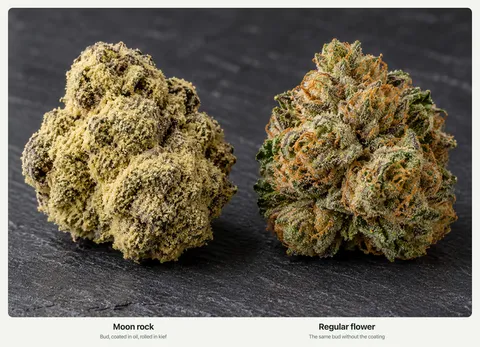
- Moon rocks: flower coated in oil and kief, a concentrate in a bud's clothing. See moon rocks.
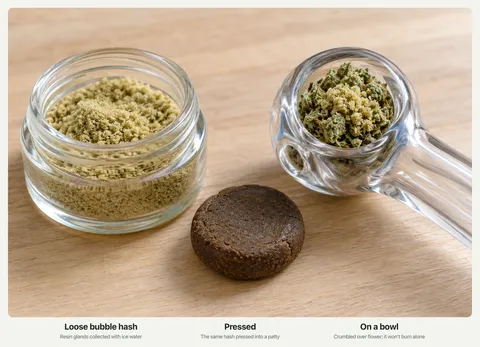
- Bubble hash: resin glands collected with ice water; the solventless cousin of these extracts. See bubble hash.
- Terps, terpy: terpenes; a flavorful dab.
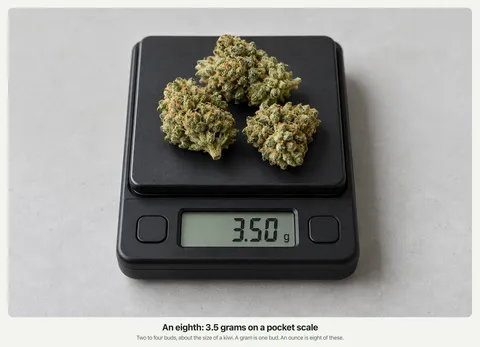
- Gram: concentrates are sold by the gram or half gram, which is many dabs.
Common questions
Do dabs get you super high?
They can. Concentrates run 50 to 90% THC or more and a dab is taken in one breath, so NIDA warns they deliver large amounts of THC fast. In one study, regular concentrate users felt about as high as flower users despite more than twice the blood THC. The researchers said that result does not apply to new users.
Are dabs safer than smoking?
No. There's no burnt plant matter, but heating terpenes at dab temperatures makes irritants, and at very high heat benzene. Add leftover solvent in untested products and the burn risk of home extraction. Lower temperature and licensed products reduce the risks; nothing removes them.
What is a dab and how do you take it?
A dab is a small amount of concentrate. It's taken on a dab rig: heat the banger with a torch, let it cool briefly, touch the concentrate to it with a dab tool while inhaling, cap it, breathe out. E-rigs and dab pens do the heating electrically.
How many dabs equal a joint?
There's no honest number. A dab is mostly THC and is inhaled in one breath, while much of a joint's THC burns away. So one small dab can deliver as much as a whole joint, or more. Treat one dab as a full session, not one puff.
What are dabs made of?
Cannabis resin, separated from the plant with a solvent like butane or CO2, with heat and pressure (rosin), or with ice water (hash). The result is sold as wax, shatter, badder, sauce, live resin, rosin or distillate.
What is a dab pen?
A small battery vaporizer with a chamber you load with concentrate, as opposed to a cart pen with pre-filled oil. It's the discreet, low-control way to dab; the vapes guide covers pens and carts.
What is dab wax?
Wax is a soft, opaque type of concentrate, one of the textures dabs come in. A wax pen is another name for a dab pen. Like all concentrates, it's far stronger than flower, and Health Canada tells new users to avoid it.
Can a beginner dab?
Health Canada tells new and occasional users to avoid extracts, and dabs are the most concentrated way to take them. Start with flower or a low-dose edible, learn how cannabis affects you, and come back to this page later if you're still curious.
We cite government health agencies and peer-reviewed research. Numbers in the text link to the source.
- Government NIDA (NIH): Cannabis (marijuana), concentrates and dabbing
- Government Montana Department of Revenue, Cannabis Control Division: Concentrate facts 101
- Government Health Canada: Cannabis, lower your risks (extracts, timing)
- CU Boulder Today on Bidwell et al. (2020), JAMA Psychiatry: concentrates raise blood THC but not impairment
- Peer-reviewed ACS Omega (2017): Toxicant formation in dabbing, the terpene story
- Peer-reviewed Journal of Medical Toxicology (2015): Butane hash oil burns associated with marijuana liberalization in Colorado